Snacks · Category-wide
Are rice crackers gluten-free?
Depends entirely on the seasoning. The rice is fine; the soy sauce glaze on most Japanese rice crackers is brewed with wheat.
- Evidence
- BNational celiac organisation
- Last checked
- 2026-08-10
- Varies by country
- No
Why
This is the single most misunderstood snack in the gluten-free aisle, and the mistake is completely logical: rice is gluten-free, so rice crackers should be gluten-free. The rice is not what gets you.
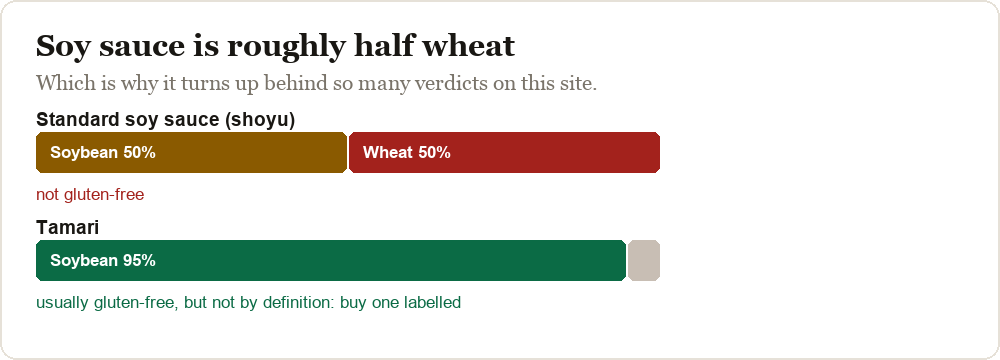
Standard soy sauce is roughly half wheat. Japanese shoyu is brewed from soybeans and cracked or roasted wheat in near-equal proportion. Beyond Celiac's guidance is explicit: people with celiac disease should only eat soy sauce that is labelled gluten-free. That wheat goes into the cracker glaze, and it survives baking.
Soy sauce is the defining flavour of most Japanese rice crackers. This isn't an occasional additive. Shoyu senbei is named after the sauce. Arare, the small bite-sized crackers made from glutinous mochi rice, is conventionally soy-flavoured. Kaki no tane, the orange crescent-shaped crackers usually sold with peanuts, is soy-glazed as a matter of course.
The published labels bear this out. Hapi Chili Bits Kaki No Tane lists soy sauce (water, soybeans, wheat, salt) and carries a "contains wheat" declaration. Kameda Seika's kaki no tane lists wheat among its allergens. Uegaki's hot kaki no tane lists soy sauce powder made with wheat. These are three different manufacturers of the same snack, all with wheat in the panel.
Beyond Celiac makes the same point about rice generally: rice is naturally gluten-free, but it is frequently sold with spices and sauces that are not, and cross-contact can occur during growing, harvesting and manufacturing. The grain being safe tells you nothing about the finished product.
Which rice crackers usually are safe. Plain salted shio senbei has no soy glaze. Unglazed okaki and plain salted arare are mochi rice and salt. And a growing number of producers use wheat-free tamari instead of shoyu and label the result gluten-free, Ka-Me's Black Sesame and Soy Sauce rice crackers, for example, list tamari soy sauce made from water, soybeans and salt, with no wheat.
Nori and furikake are a secondary trap. Seaweed-wrapped senbei is often glazed underneath the nori, and furikake seasoning blends frequently contain wheat-derived ingredients. A seasoning that looks like "just seaweed and sesame" can still carry soy sauce powder.
Western-style rice crackers are a different animal. Blue Diamond Nut-Thins, Ka-Me Original and similar US products are rice flour, oil and salt with no soy glaze, and several carry GFCO certification. Those are as safe as the certification implies.
How much risk is this?
Celiac disease: treat every rice cracker as unknown until the panel is read. Look for "wheat" in the ingredient list or the Contains statement, and read the soy sauce sub-ingredients specifically. That is where it hides. On imported Japanese packs with no English panel, do not guess; a very large share of them are soy-glazed. The safe move is a certified gluten-free product.
Non-celiac gluten sensitivity: the exposure from a glazed cracker is real but small per piece. The people who get caught are the ones eating a bowl of them.
Wheat allergy: same rule, and the peanut in kaki no tane mixes is a second allergen to watch.
Cross-contact: even certified brands can be made in shared facilities. Ka-Me, for instance, states its rice crackers are produced in a facility that also handles wheat, alongside milk, egg, sesame and tree nuts. That is a normal disclosure and does not invalidate the certification, but if you are very sensitive it is worth knowing.
What to have instead
- Blue Diamond Nut-ThinsRice flour and almonds, certified gluten-free through GFCO, non-GMO. The Original contains milk in the natural flavours; the Hint of Salt version has no added sugars, and there is a Multi-Seed Artisan line built on brown rice with quinoa, amaranth and millet. Sturdy enough for toppings.
- Ka-Me rice crackersCertified gluten-free and made from jasmine rice. The Original is jasmine rice, rice bran oil, sea salt and soybean tocopherols. The Black Sesame and Soy Sauce version gets its flavour from tamari rather than shoyu, which is exactly the substitution to look for. Wasabi and Cheese varieties are in the same certified range.
- Plain shio senbei from a Japanese grocerSalt-finished, no glaze. Confirm on the label, but this is the traditional variety that was never soy-based.
- Lundberg rice cakes and thin stackersBrown rice and salt, gluten-free, and the cheapest way to get the same crunch.
- CrunchmasterRice and seed crackers with a broad gluten-free range.
If you want the soy-sauce flavour specifically, buy plain rice crackers and glaze them yourself with tamari or coconut aminos. Tamari is the traditional Japanese soy sauce made with little or no wheat; coconut aminos are made from fermented coconut palm sap and contain no soy or wheat at all. Both brush on and crisp up in a low oven in ten minutes. Avoid unless explicitly labelled gluten-free: kaki no tane in any brand, arare, soy-glazed senbei, the "oriental rice cracker" party mixes sold in Western supermarkets (these routinely list wheat), and wasabi peas, which are usually coated in wheat flour rather than rice.
Related questions
Is senbei gluten-free? Not usually. Most senbei is glazed with wheat-brewed soy sauce. Salted shio senbei is the exception, and a handful of producers make explicitly gluten-free lines using tamari.
Is arare gluten-free? Same answer, and arare is more likely to be soy-glazed than senbei because that is its default flavour. Plain salted arare made from mochi rice and salt is fine.
Is kaki no tane gluten-free? No, as sold by the major brands. Hapi, Kameda Seika and Uegaki all list wheat via soy sauce or soy sauce powder. The peanuts are a separate allergen concern.
Are rice cakes gluten-free? Plain rice cakes, yes. Flavoured ones need the same check, caramel, cheese and "savoury" seasonings are where gluten turns up.
Is tamari always gluten-free? Almost always, but not by definition. Tamari is traditionally made with little or no wheat, and formulations vary by producer. Buy the bottle that says gluten-free on it.
Are wasabi peas gluten-free? Usually not, the crunchy coating is typically wheat flour, and the wasabi flavouring often includes further wheat derivatives. This one catches people who have correctly cleared their rice crackers.
How we checked
| Source | Tier |
|---|---|
| Beyond Celiac, Is Rice Gluten-Free?: rice is gluten-free but is often sold with sauces and spices that are not | B |
| Beyond Celiac, Is Soy Gluten-Free?: only eat soy sauce labelled gluten-free | B |
| Ka-Me Original Rice Crackers, certified gluten-free, jasmine rice base | A |
| Ka-Me Black Sesame and Soy Sauce Rice Crackers, tamari, no wheat listed | C |
| Hapi Chili Bits Kaki No Tane, soy sauce (water, soybeans, wheat, salt); contains wheat | C |
| Blue Diamond Nut-Thins, GFCO certified | A |
Overall source tier: B. Two Beyond Celiac positions support the reasoning directly, and the wheat content of specific products is confirmed on published ingredient panels rather than inferred. This is a category verdict, so it cannot carry a single manufacturer statement, the whole point of the page is that the answer changes bag to bag.
Last verified: 10 August 2026. Manufacturers reformulate without notice, and imported Japanese packaging changes more often than domestic. The panel on the bag in your hand outranks this page.