Prepared dishes · Various, restaurant and prepared dish
Is hot and sour soup gluten-free?
Usually no in a restaurant, the soy sauce is wheat-brewed. Made with tamari it is genuinely gluten-free.
- Evidence
- BNational celiac organisation
- Last checked
- 2026-08-13
- Varies by country
- No
Why
Hot and sour soup is a good example of a dish people rule out for the wrong reason and eat for the wrong reason.
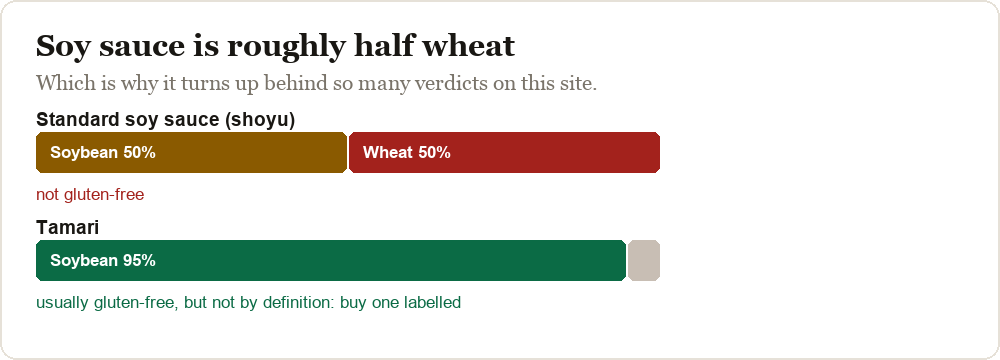
The soy sauce is the whole answer. Regular brewed soy sauce is a wheat product. San-J, which makes the best-known gluten-free tamari, states it plainly: "typical soy sauces… contain about 40-60% wheat. We make ours using 100% soybeans, with no wheat." The Celiac Disease Foundation lists soy sauce among its hidden sources of gluten and notes that "tamari made without wheat is gluten-free." Coeliac UK's takeaway guidance is blunter still: for Chinese food, "avoid wheat noodles and soy sauce." A standard restaurant hot and sour soup contains one or two soy sauces, usually a light one for salt and a dark one for colour, and that is enough on its own.
The cornstarch is not the problem, and saying it is does harm. The canonical recipe thickens with a cornstarch slurry, not flour. Cornstarch is corn. On a US label, an unqualified "modified food starch" is also not wheat: wheat is a FALCPA major allergen and must be declared, inline or in a Contains: Wheat line. Two limits on that rule, both real. It is FDA jurisdiction, so USDA-regulated meat and poultry products are not bound by it, and it covers ingredients, never cross-contact. But the thickener is the wrong thing to interrogate a waiter about, and asking about it burns the goodwill you need for the soy sauce question.
Dark and black vinegar is the second real risk, and almost nobody mentions it. Many hot and sour soups get their sourness partly from Chinese black vinegar: Chinkiang, Zhenjiang, or a Shanxi mature vinegar. These are fermented with wheat bran. A typical Chinkiang label reads "Water, glutinous rice, wheat bran, salt, sugar," with wheat declared as the allergen. Some versions add barley or sorghum. A recipe built on plain white or rice vinegar is fine; one built on black vinegar is not, and both are traditional. The Celiac Disease Foundation separately flags malt vinegar, which is barley.
Then the wheat that is actually wheat. Restaurant versions frequently bring a flour element the recipe does not require: fried wonton strips scattered on top or served alongside, wheat noodles dropped in, or a batch made from a pre-made hot and sour base powder or paste, which is where undeclared wheat starch and hydrolysed wheat protein hide. Some kitchens also velvet the pork with a marinade containing soy sauce before it goes anywhere near the pot.
Everything else in the bowl is fine. Wood ear mushrooms, dried lily buds, shiitake, bamboo shoots, tofu, egg, white pepper, chilli, sesame oil, scallions, stock. There is nothing intrinsically gluten-containing about hot and sour soup. It is a naturally gluten-free dish that the seasoning shelf ruins.
And cross-contact is a live issue in this specific kitchen. Coeliac UK warns about dishes cooked in the same pan and about oil reused from frying wheat items such as spring rolls. A ladle that has been in the wonton soup is the same problem in miniature.
How much risk is this?
Celiac disease: treat an unspecified restaurant hot and sour soup as unsafe. This is not a trace-level judgement, wheat-brewed soy sauce is an ingredient, in volume. The soup is also usually made in one large batch at the start of service, so there is no "make mine without" once the pot exists. Ask before you order, not after.
Non-celiac gluten sensitivity: same reasoning, lower stakes. Some people tolerate the small amount of hydrolysed wheat protein in soy sauce; that is your call to make, not ours to make for you.
Wheat allergy: the same answer, and cross-contact matters more, because an allergic response does not scale with dose the way celiac damage does.
The realistic best case: a restaurant that already runs a gluten-free menu, uses tamari, and cooks allergy orders in a separate wok. Somewhere that publishes an allergen menu is far easier to navigate than an unlabelled independent, but order from that gluten-free menu by name rather than assuming a regular-menu dish translates across.
What to ask, in this order
- "Does the hot and sour soup have soy sauce in it, and is it a gluten-free soy sauce or tamari?" One question, the right question. Naming tamari signals you know what you are asking and usually gets a real answer.
- "Is there black vinegar or malt vinegar in it, or just rice or white vinegar?" The follow-up nobody asks.
- "Is the soup made from a base or powder, or from scratch?" If it is a base, the kitchen cannot tell you what is in it. That is a no.
- "Are there crispy noodles or wonton strips in it or on it?" Ask for it without, and check the bowl when it lands.
- "Is the pork marinated in soy sauce before it goes in?" Relevant to the non-vegetarian version.
- "Can it be made in a clean pot with a fresh ladle?" If the batch is already made, the honest answer is no, and a good kitchen will say so.
If any answer is "I think so" rather than "yes," order something else. Steamed rice, plain steamed vegetables and egg drop soup made with gluten-free soy sauce are the low-risk items on a Chinese menu.
What to have instead
- Make it at home. It is a 25-minute soupStock, sliced shiitake and wood ear, bamboo shoots, tofu, white pepper, tamari in place of soy sauce, rice or white vinegar in place of black vinegar, a cornstarch slurry, and an egg stirred in at the end. The dish loses nothing.
- San-J Gluten Free TamariYesCertified by GFCO and brewed from 100% soybeans with no wheat, is the default swap. Kikkoman's gluten-free tamari is the other widely stocked option. Coconut aminos work if you avoid soy as well, though they are sweeter and less salty.
- Egg drop soup, ordered as gluten-freeYesThe standard safe soup on Chinese menus, and the one most allergen-aware restaurants can actually make for you. Ask for gluten-free soy sauce and a fresh ladle.
- Hot and sour soup at a restaurant with a published gluten-free menuYesOrdered by name from that menu rather than translated across from the regular one.
- Kong Yen or a Japanese rice vinegarDependsIf you want depth without wheat bran; Japanese black vinegar (kurozu) is rice-only.
Avoid without asking: wonton soup (wheat wrappers, always), hot and sour soup with crispy noodles, packet hot and sour soup bases, and anything finished with hoisin, oyster sauce or Maggi seasoning, all of which commonly carry wheat.
Related questions
Is the cornstarch in hot and sour soup gluten? No. Cornstarch is corn, and on a US label an unqualified "modified food starch" is not wheat either, because wheat would have to be declared. This is the single most common wrong answer about this dish.
Is wonton soup gluten-free? No. Wonton wrappers are wheat flour. There is no version of this to ask about.
Is egg drop soup gluten-free? Usually the safest soup on the menu (broth, egg, cornflour), but many kitchens season it with soy sauce, so it still needs the question asked.
Is black vinegar gluten-free? Usually not. Chinkiang and Shanxi mature vinegars are fermented with wheat bran and declare wheat. Rice vinegar and distilled white vinegar are fine.
Can I just use tamari and call it done? For a home pot, yes, provided the tamari is labelled gluten-free, since a few tamari brands still include some wheat. In a restaurant, tamari solves the soy sauce but not the vinegar, the base powder or the shared ladle.
Why do some places say hot and sour soup is gluten-free? Because the dish has no flour in it, which is true and beside the point. The gluten arrives in the seasoning, not the thickener.
How we checked
| Source | Tier |
|---|---|
| Coeliac UK, takeaways guidance, "Avoid wheat noodles and soy sauce"; shared pans and shared frying oil | B |
| Celiac Disease Foundation, Sources of Gluten, soy sauce among hidden sources; "tamari made without wheat is gluten-free"; malt vinegar flagged | B |
| San-J, Our Tamari, GFCO certified; "typical soy sauces… contain about 40-60% wheat" | A |
| Chinkiang black rice vinegar, published label, "Water, glutinous rice, wheat bran, salt, sugar"; allergen: wheat | C |
| The Woks of Life, Vegetarian Hot & Sour Soup, canonical composition: two soy sauces, white vinegar, cornstarch slurry, no flour or wonton | D |
| FDA/FALCPA rule: wheat-derived ingredients must declare wheat (FDA jurisdiction only; ingredients only, not cross-contact) | C |
| Restaurant-specific allergen menus, not cited; chain menu pages could not be verified directly and change frequently. Ask the restaurant you are in. | n/a |
Overall source tier: B, verdict depends. The axis is preparation, and it is a real one you can resolve at the table: wheat-brewed soy sauce (and often black vinegar) versus tamari and rice vinegar. Two national celiac organisations identify soy sauce as the gluten vector in Chinese food; a certified manufacturer documents the wheat content of ordinary soy sauce; a published label documents the wheat bran in black vinegar. No celiac organisation has ruled on this specific dish, which is why this page tops out at B.
Last verified: 13 August 2026. Recipes vary between kitchens and change without notice, and no page can tell you what is in the pot in front of you. The answers you get from the restaurant outrank this page.