Ingredients · Category-wide
Is seaweed gluten-free?
Plain nori, wakame and kombu are gluten-free. Seasoned snacks, furikake and seaweed salad are glazed with wheat-brewed soy sauce unless the label says tamari.
- Evidence
- CPublished label or regulation
- Last checked
- 2026-08-10
- Varies by country
- No
Source gimmeseaweed.com+4 more
Why
The alga itself has no gluten and no plausible route to any. Gluten is a storage protein in the seeds of specific grasses. Seaweed has no seeds and is not a plant in that sense at all. Plain dried nori sheets, plain kombu for dashi, and plain wakame for miso soup are single-ingredient foods.
But "seaweed" in a shop usually means a seasoned seaweed product, and the seasoning is where the verdict splits. The Celiac Disease Foundation lists soy sauce as a gluten source on its Sources of Gluten page, naming "traditional soy sauce" among common gluten-containing foods and noting that "tamari made without wheat is gluten-free." That single ingredient decides almost every seaweed product on the shelf.
Which form are you holding?
| Product | Verdict |
|---|---|
| Plain nori sheets, plain kombu, plain dried wakame, one ingredient | Gluten-free |
| Sea salt / sesame oil seaweed snacks | Gluten-free, check the panel names only oil and salt |
| Snacks carrying a printed gluten-free claim or naming tamari (e.g. gimMe Teriyaki, GFCO certified) | Gluten-free |
| Korean seasoned gim, teriyaki / wasabi / barbecue snacks naming soy sauce or shoyu | Not gluten-free |
| Furikake, nori-wrapped rice crackers (senbei, arare) | Not gluten-free, soy-sauce glazed or soy sauce powder |
| Goma wakame / restaurant seaweed salad | Unresolved, the dressing usually contains soy sauce and nobody at the table can see the tub |
The resolving question is always the same: does the panel say soy sauce or shoyu, or does it say tamari? Everything below is what that looks like in each aisle.
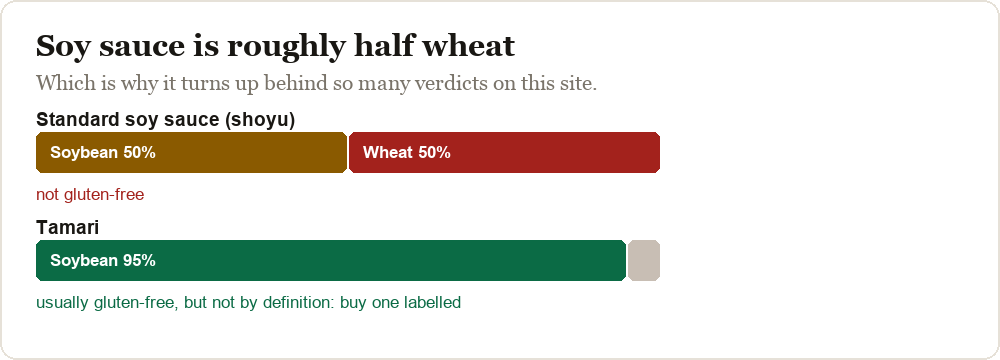
1. Soy sauce is the main event. Conventional Japanese shoyu is brewed from roughly equal parts soybean and wheat. The Celiac Disease Foundation names it outright as a gluten source. It is what most seasoned seaweed is seasoned with, which is why this page cannot ship a flat yes. Tamari is the wheat-free alternative, and it is a genuine substitution, not a marketing one: gimMe, for instance, makes its teriyaki seaweed snacks with organic tamari specifically, and the product is certified gluten-free as a result.
2. Korean seasoned gim vs Japanese nori. This is the practical shopping rule most pages miss. Plain Japanese sushi nori is usually one ingredient. Korean roasted seaweed snacks are seasoned by default, most commonly with sesame oil and salt, which is fine, but soy-sauce-seasoned versions are common too. Do not assume from the format; read the panel.
3. Seaweed salad (goma wakame) is a dressing problem. The bright green sesame-flecked salad in every sushi restaurant is wakame in a dressing that typically includes soy sauce, sesame oil, rice vinegar, sugar and sometimes mirin. Restaurants almost never make it, it arrives frozen in a tub, pre-dressed, and the kitchen may not have the ingredient panel to hand. Some commercial versions genuinely contain no soy sauce at all: one Azuma Foods goma wakame lists seaweed, sesame seed, sugar, vinegar, sesame oil, kikurage mushroom, salt, red pepper, cultured dextrose, red cabbage juice, turmeric, saffron, sodium bicarbonate and glycerin. Others do contain it. You cannot tell by looking.
4. Flavoured snack varieties. Sea salt and sesame oil versions are the lowest-risk. Teriyaki, wasabi and "barbecue" flavours are the ones to scrutinise, because teriyaki sauce is soy-sauce-based unless the maker has switched to tamari, and wasabi seasoning powders sometimes carry wheat-based carriers.
5. Furikake and nori-based garnishes. Rice seasonings containing nori frequently include soy sauce powder, and Japanese rice crackers wrapped in nori (senbei, arare) are typically glazed with soy sauce over a rice base. The rice is fine, the glaze is not.
6. Facility statements. Many nori packs carry "may contain wheat" or "produced in a facility that also processes wheat." That is a voluntary precautionary statement, not a measurement. It reflects a shared line, often with soy-sauce-seasoned products made in the same plant.
Barley and rye are not declarable US allergens, but for seaweed this matters less than usual, because the gluten source here is almost always wheat, which must be declared. If a seaweed product's Contains line does not say wheat and the ingredient list does not say soy sauce or shoyu, you are in good shape.
How much risk is this?
Celiac disease: plain nori, wakame and kombu are safe. Seasoned snacks are safe when the label says tamari or carries a gluten-free claim, and unsafe when it says soy sauce or shoyu. Treat restaurant seaweed salad as unverified unless someone actually reads the tub for you.
Non-celiac gluten sensitivity: same shape, lower stakes. The seaweed will never be the problem; the dressing might be.
Wheat allergy: the best-protected group, because wheat in soy sauce must be declared on a US label. Read the Contains line and you have your answer.
Iodine, not gluten, is the other thing to watch. Kombu in particular is extremely high in iodine, and daily heavy consumption of kelp products can affect thyroid function. That has nothing to do with celiac disease, but it is the genuine limiting factor on how much seaweed to eat.
What to have instead
You do not need to avoid seaweed. You need to buy the seasoned versions from brands that made the tamari switch:
- Plain sushi nori, one ingredientGimMe's sushi nori sheets, for example, list organic seaweed and nothing else. The safest thing in the aisle and the most versatile.
- gimMe Teriyaki and other seasoned snacksCertified gluten-free and seasoned with organic tamari rather than soy sauce; the panel reads organic seaweed, sesame oil, sunflower oil and an organic teriyaki powder built on tamari. Contains soy, no wheat.
- Sea salt and sesame oil seaweed snacksGenerally, the shortest seasoning list in the category, and usually just oil and salt.
- Kombu for dashiPlain dried kelp, one ingredient. Make dashi with kombu and bonito flakes and you have a gluten-free stock base; the risk is instant dashi powder, which often contains wheat.
- Make seaweed salad at homeDried wakame rehydrates in five minutes. Dress with tamari or coconut aminos, rice vinegar, sesame oil, a little sugar and toasted sesame seeds. Ten minutes, no ambiguity.
- Dulse and Irish mossFor non-Japanese uses, plain dried sea vegetables with no seasoning tradition attached.
Avoid unless the label clears them: pre-dressed seaweed salad of unknown origin, teriyaki-flavoured snacks without a gluten-free claim, furikake, nori-wrapped rice crackers, and instant miso and dashi sachets.
Related questions
Is nori gluten-free? Plain nori sheets, yes, one ingredient. Seasoned nori (Korean gim in particular) is seasoned nori, and the seasoning is the question. Japanese-import plain nori is the lowest-risk version.
Is seaweed salad gluten-free? Sometimes. The wakame is; the dressing usually contains soy sauce. Ask the restaurant to read the tub, or make it at home with tamari. Never assume it is safe because it looks like vegetables.
Are seaweed snacks gluten-free? The plain, sea-salt and sesame-oil ones almost always are. Teriyaki and wasabi versions depend entirely on whether the maker used tamari or soy sauce, gimMe's teriyaki is certified gluten-free because it uses tamari.
Is sushi gluten-free? The nori and rice are. The imitation crab is not, surimi typically contains wheat. Neither is the standard soy sauce, the eel sauce, the tempura, or anything from a shared fryer. See is sake gluten-free for the rest of the Japanese-restaurant map.
Is tamari always gluten-free? Usually but not automatically. Traditional tamari is a byproduct of miso production and contains little or no wheat, but some commercial tamari includes a small amount. Buy one that carries a printed gluten-free claim.
Is kombu or wakame in miso soup safe? The seaweed is. Miso itself is sometimes made with barley (mugi miso), and instant miso sachets often include dashi powder with wheat. The soup is the question, not the seaweed in it.
How we checked
| Source | Tier |
|---|---|
| gimMe Teriyaki Seaweed Snacks, certified gluten-free, organic tamari in place of soy sauce, published ingredient list | A |
| Target listing, gimMe Organic Roasted Seaweed Teriyaki, Certified Gluten-Free | C |
| Celiac Disease Foundation, Sources of Gluten, lists "traditional soy sauce" among common gluten-containing foods, and "Soy sauce (though tamari made without wheat is gluten-free)" among foods that may contain gluten | B |
| Spoonful, Azuma Foods Goma Wakame ingredient panel, screening database; shows some commercial seaweed salads contain no soy sauce at all | D |
| Fig, Is nori seaweed gluten free? | D |
Overall source tier: C. No national celiac organisation has ruled on seaweed as a category, which is why this is tier C rather than B. What we have is one tier-A certification covering one seasoned product line (gimMe, GFCO, tamari-based) and a tier-B ruling from the Celiac Disease Foundation on the ingredient that actually decides the question, soy sauce. That combination supports a split verdict, not a clean one: the alga is safe, the seasoning is the variable, and the panel on the pack is the only thing that resolves it.
A correction, recorded openly. An earlier version of this page cited the Celiac Disease Foundation's "What is Gluten?" page for the soy sauce claim. That page does not mention soy sauce. The claim is correct and the organisation does document it (on its Sources of Gluten page, now cited above), but the original citation did not carry it, and it was this page's only tier-B source.
Last verified: 10 August 2026. Seasonings and facility statements change, and seaweed salad recipes vary by supplier. The panel on the pack, or the tub in the restaurant's kitchen, outranks this page.