Ingredients · Category-wide
Are jimmies gluten-free?
Unconfirmed. Most jimmies use corn starch, not wheat, but no mainstream brand publishes a gluten statement and dextrin is undeclared.
- Evidence
- CPublished label or regulation
- Last checked
- 2026-08-10
- Varies by country
- No
Source wilton.com+3 more
Why
Jimmies (the little rod-shaped sprinkles, as opposed to the ball-shaped nonpareils), are one of the most-asked and least-documented gluten questions in baking, because the product is trivially cheap and almost nobody in the category bothers to certify.
The typical formula is gluten-free. A current Wilton Rainbow Jimmies label reads: sugar, corn starch, hydrogenated palm oil, dextrin, confectioner's glaze, carnauba wax, soy lecithin, and a run of FD&C colours. Older versions used partially hydrogenated vegetable oil and added natural and artificial flavour. Corn starch, not wheat starch, is the filler doing the structural work. On the face of it, there is no gluten in there.
But two ingredients don't declare their source. Dextrin is a partially hydrolysed starch used as a binder and glazing aid. It is usually corn- or tapioca-derived, and it can be wheat-derived. The label never says. Maltodextrin, which appears on some sprinkle labels, has the same problem, usually corn or tapioca, occasionally wheat. This is the exact reason ingredient-screening databases refuse to clear jimmies and instead flag them as "may or may not be gluten free" pending a call to the manufacturer. It is a disclosure gap, not evidence of gluten.
Wheat starch in sprinkles is real, not hypothetical. Some manufacturers use wheat starch as the binder instead of corn starch, and several gluten-free writers report finding it on specific nonpareil and sprinkle labels. It is a minority practice, but it is enough that "sprinkles are naturally gluten-free" is not a safe generalisation. Read the starch line before anything else.
No brand-level claim exists on the mainstream products. Wilton does not print a gluten-free claim on Rainbow Jimmies. Betty Crocker and Cake Mate carry no consistent claim either, and the third-party reporting on them is contradictory, the same page will call a product gluten-free in one paragraph and wheat-containing in the next, which tells you those pages are recycling each other rather than reading labels. No mainstream sprinkle brand has published a gluten statement we could locate.
Facility history matters more here than in most categories. Older Wilton labels carried "Made in a facility that also processes peanuts, tree nuts, milk and wheat products." Current labels show a narrower "Contains: soy. Made on equipment that also processes: tree nuts," with no wheat. Two different answers from the same brand a few years apart, which is why an undated verdict on a sprinkle is worthless.
"May contain wheat" is not the same as wheat. A shared-facility warning is voluntary precautionary language about possible trace transfer, not an ingredient disclosure, not standardised between companies, not a legal threshold. It matters for celiac disease, because trace transfer is the exposure that matters, but it is a different fact from "contains wheat starch," and sprinkle write-ups merge the two constantly.
How much risk is this?
Celiac disease: the practical risk from a spoonful of jimmies is low, the serving size is tiny, and corn starch is the norm. But sprinkles go on birthday cakes and get eaten repeatedly by children over a childhood, and the disclosure gap is genuinely unresolved. If you are strict, buy certified. It costs a few pounds more and removes the question permanently.
Non-celiac gluten sensitivity: almost certainly a non-issue at these quantities, even in the worst case where the dextrin were wheat-derived.
Wheat allergy: the group with the most reason to resolve it before use, since allergic response isn't dose-dependent the way celiac damage is. Call the manufacturer or buy a labelled product.
Bulk and bakery sprinkles are the real hazard. Sprinkles bought from a bakery counter, a bulk bin, or scooped into a bag at a cake-decorating shop have been in a flour environment. That is a far larger exposure than anything on the ingredient list, and no label covers it.
How to resolve it yourself
Faster than it sounds:
- Read the starch line first. "Corn starch" is a green light on the ingredient side. "Wheat starch" is an immediate no. Unspecified "starch" needs a call.
- Then look for dextrin or maltodextrin. If either is present with no source given, that is the ingredient to ask about by name, naming it gets you a real answer instead of a boilerplate disclaimer.
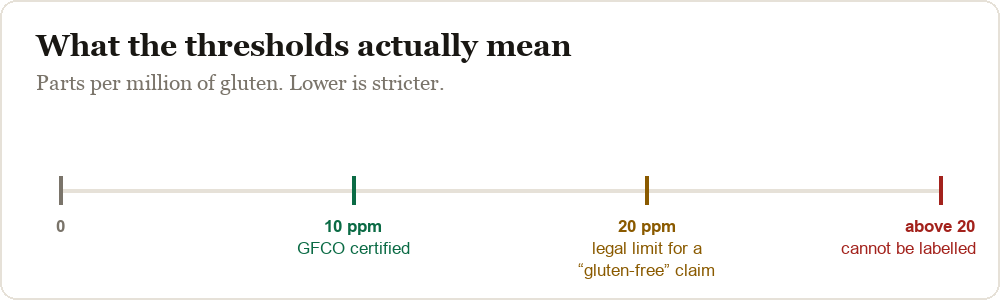
- Check for a gluten-free claim on the bottle. In the US that claim carries a 20 ppm legal ceiling, which is more than an inference from a list.
- Call the brand if it matters. Ask: "What is the botanical source of the dextrin in this product, and is wheat handled on the same line?"
What to have instead
Certified sprinkles are widely available now and remove the whole problem:
- Supernatural SprinklesCertified gluten-free, made with cane sugar, tapioca starch and plant-based colours, produced under allergen-controlled conditions. Their jimmies-style "Softies" and nonpareil ranges both carry the labelling. The most-recommended option in the gluten-free baking community.
- SweetapolitaFrequently listed among gluten-free sprinkle brands and the usual choice for decorative sprinkle medleys.
- India TreeAnd Let's Do Organic sprinkles. Both named on gluten-free sprinkle lists, both with short ingredient statements.
- Chocolate shavings or coloured sanding sugarIf you just need something decorative, a grated plain chocolate bar or coarse coloured sugar has a three-ingredient label and sidesteps starch and dextrin entirely.
Whatever you choose, look for a GFCO seal if you want certification rather than a manufacturer claim, and avoid bulk-bin sprinkles regardless of brand.
Related questions
Are sprinkles gluten-free in general? Most are, by ingredient. Sugar, corn starch, oil, wax and colour is the standard build and none of it is a gluten grain. The category's problem is that almost nobody certifies, several labels contain undeclared-source dextrin, and a minority of products use wheat starch, so "most are" cannot be upgraded to "yes".
What is the difference between jimmies and nonpareils? Jimmies are the rod-shaped sprinkles; nonpareils are the tiny hard balls. They are made differently, nonpareils are panned around a starch or sugar core, and some writers report finding wheat-derived starch in nonpareils specifically. Check them separately rather than assuming one answer covers both.
Are Wilton Rainbow Jimmies gluten-free? Wilton makes no gluten-free claim on them. The current label uses corn starch and no longer carries the older wheat facility warning, but the dextrin source is undeclared. Practically low-risk, formally unverified, which is why this page's verdict is what it is.
Are chocolate jimmies different? Chocolate sprinkles add cocoa and sometimes wheat-based fillers or malt, so they deserve their own label check. Malt in a chocolate coating is a common gluten source across confectionery generally.
Is dextrin gluten? Not inherently. Dextrin is a processed starch, and the question is which starch, corn and tapioca dextrin are gluten-free, wheat dextrin is not, and highly processed wheat dextrin may still test below the threshold. Since the label doesn't say, it can't be cleared from the label alone.
Are the sprinkles on a shop-bought doughnut or cake gluten-free? Irrelevant. The doughnut isn't. The only time bakery sprinkles matter is when they are being applied to something you have already established is safe, and by then you should be asking about the bakery's environment rather than the sprinkle.
How we checked
| Source | Tier |
|---|---|
| Wilton Rainbow Jimmies, official product page and ingredient list, sugar, corn starch, hydrogenated palm oil, dextrin, glaze, wax, soy lecithin, colours; no gluten-free claim | C |
| Published jimmies ingredient list, corn starch base, dextrin present | D |
| Ingredient screening, Wilton Rainbow Jimmies, flagged as uncertain on one ingredient (the dextrin) | D |
| Good For You Gluten Free, sprinkle brand testing, reports wheat-derived starch found on some sprinkle labels | D |
| Wilton, Betty Crocker, Cake Mate, no published gluten statement located for any mainstream jimmies product | n/a |
Overall source tier: C, verdict unverified. We are publishing this unresolved deliberately. The ingredient evidence supports "probably gluten-free" and does not support "gluten-free," and there is no manufacturer statement, no celiac-organisation verdict and no certification behind the mainstream brands. If Wilton or another major brand issues a source statement for its dextrin, this page moves up and the verdict changes.
Last verified: 10 August 2026. Sprinkle formulations and facility statements have demonstrably changed within the last few years on the same product. The bottle in your hand outranks this page.