Sauces & condiments · Category-wide: Kikkoman, Otafuku, Yamasa and restaurant house-made
Is eel sauce gluten-free?
By default. Eel sauce is soy sauce, mirin and sugar, and standard Japanese soy sauce is brewed with wheat.
- Evidence
- BNational celiac organisation
- Last checked
- 2026-08-10
- Varies by country
- No
Source kikkomanusa.com+6 more
Why
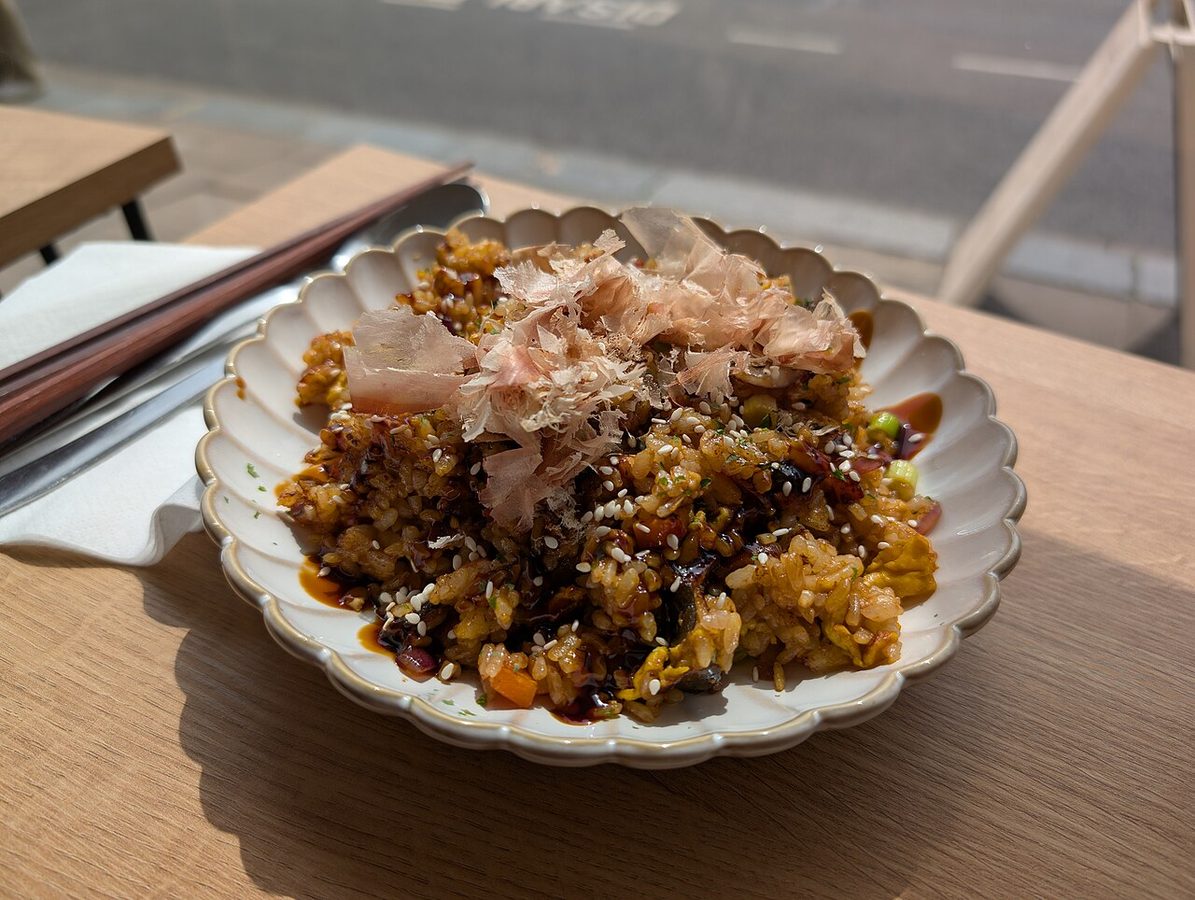
Eel sauce contains no eel. It is unagi no tare, the sweet-salty glaze brushed onto grilled eel, and on a US sushi menu it turns up drizzled over dragon rolls, tempura rolls, rice bowls and just about anything the kitchen wants to make look glossy. It is also sold as "sushi sauce" or "nitsume."
The recipe is short, which is why the verdict is so clean-cut. Soy sauce, mirin, sugar, sometimes sake, sometimes a little dashi, simmered until syrupy. There is no flour, no thickener, no mystery. Reduce the soy sauce and you have concentrated whatever was in the soy sauce, including its wheat protein.
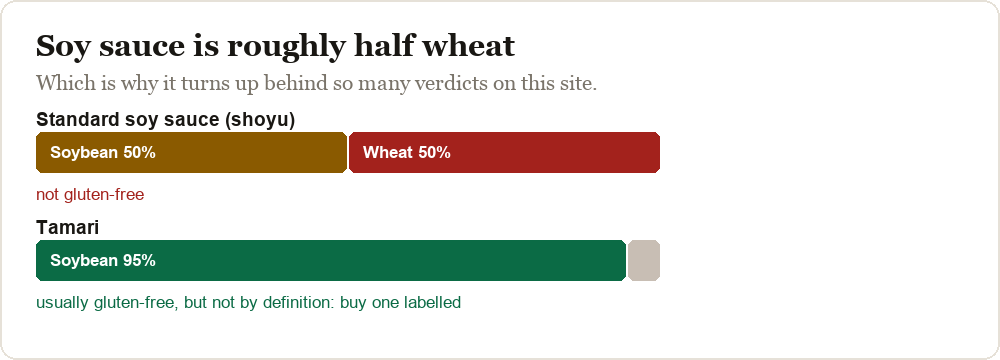
Standard shoyu is a wheat product. Kikkoman states that its traditionally brewed soy sauce is made from wheat, soybeans, salt and water, and that the same applies to products built on it, such as its teriyaki sauces. Kikkoman's European arm goes further and says outright that although fermentation breaks gluten down so the final content is minimal, gluten-free status cannot be guaranteed for regular soy sauce, and recommends its tamari for anyone avoiding gluten. That is the manufacturer telling you not to gamble.
"Fermentation destroys the gluten" is not a safe assumption. It is a real effect, brewing does degrade gluten proteins, but the residual level in conventional shoyu is not reliably below 20 ppm, no producer certifies it, and eel sauce concentrates the soy sauce by reduction. You are eating a reduced version of the thing that was already unreliable.
Tamari is the fix, and it is a real distinction, not marketing. Tamari is traditionally brewed from soybeans with little or no wheat. San-J brews its tamari from 100% soybeans, with no wheat, and it is certified gluten-free by GFCO. Kikkoman's Gluten-Free Soy Sauce is a tamari-style product brewed from water, soybeans, rice and salt, and is certified gluten-free. Swap either into an eel sauce recipe and the sauce is gluten-free.
Two smaller checkpoints once the soy sauce is handled. Some commercial tare sauces add a starch or thickener, a genuine risk on cheaper bottles. And mirin varies: true hon-mirin is rice-based and fine, while Western-market "aji-mirin" and mirin-style seasonings carry added ingredients, including glucose syrups, that recipe developers have flagged as unverified. Neither of these matters until you have already dealt with the soy sauce.
How much risk is this?
Celiac disease: treat any eel sauce without a gluten-free label as unsafe, including every restaurant one unless the kitchen shows you the bottle. Sushi restaurants are a high-risk environment generally, the soy sauce, the eel sauce, the spicy mayo's ponzu, the tempura, the panko in crunch rolls, and imitation crab (which usually contains wheat starch) are all wheat vectors on a menu that looks like it should be safe.
Non-celiac gluten sensitivity: many people tolerate brewed shoyu because the residual gluten is low. That is a personal call, not a safety claim, and a reduced sauce is a bigger dose than a dip.
Wheat allergy: avoid conventional soy sauce and anything built on it outright. Fermentation does not make an allergen disappear.
Ordering out: the practical script is "no eel sauce, no spicy mayo, no tempura, no crunch, and I've brought my own soy sauce." Carrying a small bottle of tamari to Japanese restaurants is normal behaviour and no chef minds.
What to have instead
- Otafuku Gluten Free Eel Sauce (sold as gluten-free sushi sauce)YesThe most widely available ready-made gluten-free option; easier to order online than to find in a store.
- Yamasa Gluten Free Soy GlazeYesA close analogue in flavour and viscosity, works as a direct drizzle substitute.
- Make it in five minutesEqual parts tamari, mirin and sugar, say 60 ml each, simmered until it coats a spoon, roughly 8–10 minutes. Keeps in the fridge for weeks. This is the cheapest and most reliable answer and it tastes better than the bottle.
- San-J TamariAs your base soy sauce. Brewed from 100% soybeans, no wheat, GFCO certified, and it also fixes teriyaki, ponzu and stir-fries.
- Kikkoman Gluten-Free Soy SauceYesBrewed with rice instead of wheat and certified gluten-free, the easiest one to find in a mainstream US supermarket.
- Coconut aminosIf you also want to drop the soy. Sweeter and less salty, so cut the added sugar when you reduce it.
regular Kikkoman, "lite" soy sauce, teriyaki sauce, hoisin (usually contains wheat), oyster sauce (frequently thickened with wheat), and any restaurant's house eel sauce.
Related questions
Is unagi sauce gluten-free? Same sauce, same answer. "Unagi sauce," "eel sauce," "nitsume" and "sushi sauce" all describe the same soy-mirin-sugar glaze, and all hinge on the soy sauce.
Is soy sauce gluten-free? Standard brewed shoyu, no. It is made with wheat, and Kikkoman Europe says gluten-free status cannot be guaranteed. Tamari and products explicitly labelled gluten-free are the safe versions.
Is tamari always gluten-free? Almost always, but not by definition, some tamari is brewed with a small percentage of wheat. Buy one that says gluten-free on the label, such as San-J, which is GFCO certified.
Is mirin gluten-free? True hon-mirin is rice-based and gluten-free. Western "aji-mirin" and mirin-style seasonings contain added ingredients and are worth reading. It is the second thing to check after the soy sauce, not the first.
Is teriyaki sauce gluten-free? Usually not, for exactly the same reason: Kikkoman states its teriyaki sauces are made with its traditionally brewed soy sauce, which contains wheat. Gluten-free teriyaki exists; buy it deliberately.
Is sushi rice or nigiri safe? The rice, fish and rice vinegar are fine. The risks are the sauces, imitation crab, tempura and the shared prep surfaces, not the raw fish.
How we checked
| Source | Tier |
|---|---|
| Kikkoman USA, Gluten-Free Soy Sauce, brewed with rice instead of wheat, certified gluten-free | A |
| Kikkoman USA, gluten-free product family | A |
| Kikkoman Europe FAQ, gluten-free status of standard soy sauce cannot be guaranteed; tamari recommended | A |
| San-J, Tamari, 100% soybeans, no wheat, GFCO certified | A |
| Otafuku Gluten Free Eel Sauce | C |
| Zero Gluten Guide, gluten-free eel sauce brands | D |
| Little Helpers, is unagi sauce gluten-free | D |
Overall source tier: B. No manufacturer publishes an allergen statement for "eel sauce" as a category, because it is a preparation rather than a single branded product. The verdict is built from Kikkoman's own confirmation that standard soy sauce is brewed with wheat and cannot be guaranteed gluten-free. That is a strong chain, but it is inference from one ingredient.
Last verified: 10 August 2026. Individual brands reformulate, and restaurant house-made sauces are outside anyone's labelling. The bottle in your hand, or the one the kitchen shows you, outranks this page.