Alcohol · Category-wide (GT's, Health-Ade, Brew Dr., JuneShine, Flying Embers, Boochcraft)
Is kombucha gluten-free?
Tea-brewed kombucha contains no grain and is gluten-free. Malt-flavoured kombucha and barley-brewed hard kombucha are not.
- Evidence
- CPublished label or regulation
- Last checked
- 2026-08-10
- Varies by country
- No
Source health-ade.com+3 more
Why
Kombucha gets grouped with beer in people's heads because both are fermented and both are fizzy. The comparison is misleading in the way that matters: beer gets its fermentable sugar from malted barley, and kombucha gets it from ordinary cane sugar. There is no grain in the base recipe at all.
The base is four gluten-free ingredients. Tea (black, green, or both), water, sugar, and a SCOBY, the symbiotic culture of bacteria and yeast that does the fermenting. The sugar is food for the culture rather than a sweetener, which is why finished kombucha is tart rather than sweet. GT's Synergy, the category's biggest brand, lists exactly this: a 30-day ferment of kombucha culture, black tea, green tea, juice and cane sugar.
Malt is the ingredient that breaks it. Malt almost always means barley. A kombucha flavoured with malt, malt extract, malt syrup or malt vinegar is not safe for celiac disease, and under FDA rules such a product cannot carry a gluten-free claim. This matters more than it sounds, because of a labelling quirk: wheat is a declared US allergen and barley is not. A "contains: wheat" line will catch wheat, but barley malt will only ever appear in the ingredient list itself. Nobody is going to flag it for you.
Hard kombucha is a separate product with separate rules. Once a kombucha crosses 0.5% ABV it moves from FDA to TTB jurisdiction, and the recipes diverge. Most hard kombuchas are still tea-based and gluten-free, Flying Embers states all its products are certified gluten-free, JuneShine's jun kombucha is brewed from green tea and honey and marketed as gluten-free, and Boochcraft's organic hard kombucha is described as gluten-free. But barley-blended kombucha hybrids exist, they sit in the beer cooler, and the can still says "kombucha" on the front. Do not carry the assumption across from the grocery shelf to the alcohol aisle.
Certification varies more than the marketing suggests. Health-Ade states its kombucha is Certified Gluten Free alongside USDA Organic and Non-GMO Project Verified. GT's declares "gluten free" on the panel, but the word certified there attaches to its organic certification, not the gluten claim. Both are very likely fine; only one has put a certifier behind the gluten statement. If you are strict, that distinction is worth a pound a bottle.
Home-brewed kombucha is the wild card. A SCOBY passed between friends has an unknown history, and some brewers feed cultures on unconventional substrates or brew in a kitchen full of flour. If the kombucha did not come from a factory, ask what went into it.
How much risk is this?
Celiac disease: commercially bottled, tea-based kombucha with a gluten-free label is fine, and it is one of the better packaged drinks for gut-health reasons besides. Scan the ingredient list for malt on any flavoured variety, and treat hard kombucha as a fresh question each time rather than a settled one.
Non-celiac gluten sensitivity: the same guidance applies with more latitude. The genuine issue for many people with sensitive guts is not gluten but the acidity and the live cultures, start with a small serving.
Wheat allergy: effectively a non-issue. Wheat must be declared on the US allergen line, and no mainstream kombucha uses it.
Cross-contact: low in a bottling plant, higher on draught. Kombucha taps in cafés and taprooms sometimes share lines, couplers and cleaning runs with beer lines. If you have celiac disease and the kombucha is coming out of a tap next to a beer tap, ask whether the lines are shared, and take the bottle instead.
What to have instead
If a flavour turns out to contain malt, or the taproom cannot answer the tap-line question, these are the named alternatives:
- Health-Ade KombuchaCertified gluten-free per the brand's own FAQ, along with organic, Non-GMO and vegan. The clearest documentation in the category.
- GT's SynergyGluten-free declared on the label, no grain in the ferment, and the most widely stocked kombucha there is.
- Brew Dr. KombuchaTea-based, sold nationally, and the brand publishes its own explainer on kombucha and gluten.
- Flying Embers (hard)States all products are certified gluten-free, dry fermented to zero sugar. The best-documented hard kombucha.
- JuneShine (hard)Organic jun kombucha from green tea and honey, marketed gluten-free. Not vegan, because of the honey.
- Boochcraft (hard)7% ABV, organic, gluten-free and vegan, no honey.
- Water kefir, kvass made from beetroot rather than bread, or plain sparkling teaIf you want the fermented-drink experience with an even shorter ingredient list. Note that traditional bread kvass is made from rye and is not gluten-free.
Avoid: any kombucha listing malt, malt extract or barley, kombucha-beer hybrids (sometimes sold as "kombeercha" or similar), and draught kombucha at a brewery unless someone can confirm the lines are dedicated.
Related questions
Is GT's kombucha gluten-free? Yes by the label, GT's Synergy declares "gluten free" on the panel and the ferment is tea, cane sugar and juice with no grain. Note that the "certified" wording on the bottle refers to its organic certification; the gluten-free statement is a manufacturer declaration rather than a third-party certification.
Is Health-Ade kombucha gluten-free? Yes, and it is the better-documented option: Health-Ade's own FAQ states its kombucha is Certified Gluten Free as well as USDA Organic, Non-GMO Project Verified and vegan.
Is hard kombucha gluten-free? Often, but not automatically. Flying Embers, JuneShine and Boochcraft all state gluten-free. Other hard kombuchas are brewed or blended with grain, and above 0.5% ABV they follow TTB labelling rules rather than FDA ones. Check each brand rather than the category.
Does kombucha contain barley? Plain kombucha does not. Barley enters only through added malt in a flavouring or through a deliberately grain-blended hard kombucha. It will be named on the ingredient list, since barley is not a declarable US allergen and never appears on the "contains" line.
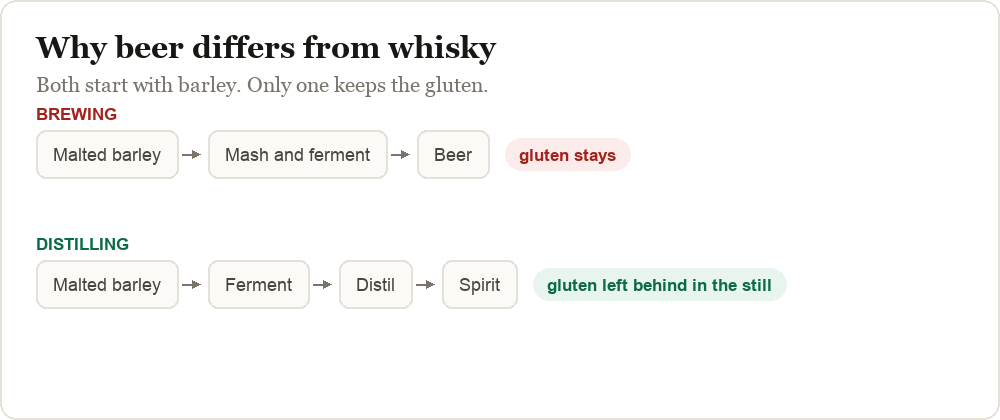
Is the alcohol in kombucha a problem for celiac disease? No. The trace alcohol in non-alcoholic kombucha comes from yeast fermenting cane sugar, not grain, so there is no gluten route. And in a hard kombucha, any alcohol that has been distilled is gluten-free regardless of source.
Can I drink kombucha with celiac disease while my gut is healing? Gluten is not the obstacle, the acidity and live cultures can be. Many people with newly diagnosed celiac disease find fermented drinks easier once the mucosa has recovered somewhat. Start with half a bottle and see.
How we checked
| Source | Tier |
|---|---|
| Health-Ade FAQ, kombucha stated as Certified Gluten Free | A |
| Flying Embers, all products stated certified gluten-free | A |
| Celiac.com, Is Kombucha Gluten-Free? What People With Celiac Disease Should Know, commercial publisher, not a celiac organisation | D |
| US labelling rules, wheat is a declarable allergen, barley is not; kombucha above 0.5% ABV falls under TTB | C |
| Brew Dr. Kombucha, industry corroboration | D |
Overall source tier: C. Say this plainly: no national celiac organisation has published guidance on kombucha. Beyond Celiac, the Celiac Disease Foundation and Coeliac UK are silent on it, and the one article written for a celiac audience, Celiac.com's, is secondary reporting. What is left is strong at brand level and thin at category level (Health-Ade and Flying Embers each publish a gluten statement about their own products, which supports their rows and not the category), plus the published labels and the FDA/TTB rules that make malt disqualifying. That is a thin footing for a category verdict. It is filed as depends rather than gluten-free because the malt exception and the barley-blended hard kombuchas are real products, not hypotheticals, and because a reader who assumes the whole category is safe will eventually pick up the one bottle that isn't.
Last verified: 10 August 2026. Kombucha brands add and retire flavours constantly, and a safe brand can launch an unsafe flavour. The ingredient list on the bottle in your hand outranks this page.