Ingredients · Category-wide
Is matcha gluten-free?
Pure matcha is ground green tea leaf and nothing else. Latte powders, café blends and flavoured mixes are where gluten enters.
- Evidence
- BNational celiac organisation
- Last checked
- 2026-08-10
- Varies by country
- No
Source nationalceliac.org+3 more
Why
Pure matcha has one ingredient. Tencha leaves, shaded for weeks before harvest, steamed, dried, de-stemmed and ground. Ceremonial and culinary grades differ by harvest and flavour, not by composition. Both are 100% tea leaf. If the label says "matcha" or "green tea powder" and nothing else, you are done.
Now the four ways matcha stops being matcha.
1. Latte and "matcha blend" powders. These are the single biggest source of gluten in the matcha aisle, and they outsell pure matcha comfortably. A sweetened matcha latte mix is typically sugar or milk powder first, matcha second, plus a flow agent, a stabiliser and a flavour system. Malt powder, malt extract, wheat starch and unsourced "natural flavors" all appear in this category. The word "matcha" on the front of a pouch does not tell you what is in it.
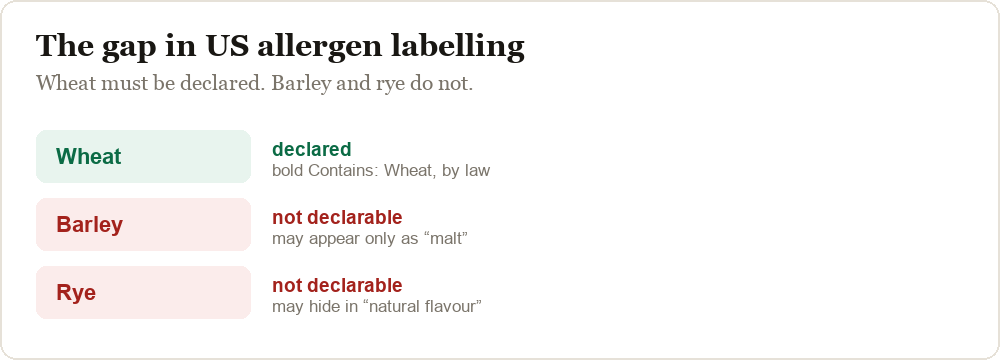
2. Barley and malt are not declarable allergens in the US. This is the mechanism that makes the risk real rather than theoretical. Under FALCPA, wheat must be declared in a "Contains" statement, barley and rye need not be. So a matcha drink mix containing barley malt is fully compliant with a "Contains: Milk, Soy" line and no mention of gluten anywhere. You have to read the ingredient list itself and look for the words malt, malt extract, malt flavoring, malted barley and barley.
3. Café matcha. Coffee shops almost never use plain matcha. Starbucks' matcha, for instance, is a two-ingredient Matcha Tea Blend of sugar and ground green tea, no gluten, but also not something you can un-sweeten, and it tells you how normal it is for the café's powder to be a pre-mix rather than pure tea. Other chains use blends with more in them. On top of that, Starbucks states it cannot guarantee any unpackaged in-store drink is allergen-free, because the same shakers, blenders, pitchers and steam wands are used across the whole menu. Add a syrup, a cookie-crumb topping, or a non-certified oat milk, and the risk compounds fast.
4. Matcha-flavoured food is not matcha. Matcha KitKats, matcha cookies, matcha cake, matcha mochi from a shared bakery, matcha protein powders with cereal-derived thickeners. These follow the rules of their own category, mostly wheat.
A tea-aisle trap worth naming. Two Japanese powders and teas get confused with matcha and one of them is a hard no:
- Mugicha (Japanese barley tea) is roasted whole barley. It contains gluten. Nothing about roasting or brewing changes that, and again, barley will not appear as a declared allergen.
- Genmaicha, including matcha-iri genmaicha, is green tea blended with roasted brown rice. Rice is gluten-free, so the blend is fine by ingredient; the only question is whether it was packed on equipment shared with mugicha or grain-based wellness teas.
- Hojicha (roasted tea leaf) and sobacha (roasted buckwheat, unrelated to wheat) are both gluten-free.
The National Celiac Association's guidance on tea flags matcha specifically as a powdered tea that has sometimes had wheat added to it, which is why "read the ingredient list even on something that should only have one ingredient" is the right habit here.
How much risk is this?
Celiac disease: pure single-ingredient matcha is safe. Be strict about two things: packaged latte mixes, and café drinks. For a café, ask what is in the powder and whether it is pre-sweetened; if the barista does not know, order plain brewed tea instead. Also check your milk: oat milk is a common hidden gluten source unless it is certified gluten-free.
Non-celiac gluten sensitivity: pure matcha is a non-issue. Latte mixes are worth reading but the stakes are lower.
Wheat allergy: better protected than celiacs here, because wheat must be declared. A blend containing barley malt is a celiac problem, not a wheat-allergy one.
Cross-contact at source: tea is processed on tea equipment, and the risk is low. Where it rises is Western-packed wellness blends that combine tea with grains, roots and cereal-derived "superfood" powders in one facility.
What to have instead
You do not need to give up matcha. You need to buy a shorter ingredient list:
- Single-ingredient matcha powderCeremonial or culinary. The label should read one word. Brands that carry a certified gluten-free mark close the cross-contact question too, worth paying for if you are strict.
- Make the latte yourselfMatcha, hot water, whisk, then milk. This removes every risk on this page in about ninety seconds, and costs a fraction of the café version.
- Certified gluten-free oat milkDependsOr dairy, almond, soy or coconut milk. Oat milk is the only one with a built-in gluten question.
- HojichaIf you want a roasted, low-caffeine tea, roasted tea leaf, no grain.
- Sobacha (roasted buckwheat tea)For the toasty, nutty character mugicha gives, without the barley. Buckwheat is not wheat.
- Genmaicha or matcha-iri genmaichaFrom a Japanese tea importer, ideally one that states it does not handle wheat, barley or rye.
- Sencha, gyokuro, banchaAll plain leaf teas, all gluten-free.
Avoid unless the label clears them: instant matcha latte sachets, "matcha superfood blends," matcha protein powders, and mugicha, which is barley and is never gluten-free.
Related questions
Is matcha tea gluten-free? Yes, brewed or whisked from pure matcha powder, it is one ingredient and contains no gluten. Bagged "matcha green tea" blends can contain other things; check the ingredient panel.
Is a Starbucks matcha latte gluten-free? The Matcha Tea Blend itself is sugar and ground green tea, with no gluten ingredient. The caveat is Starbucks' own: they cannot guarantee any unpackaged drink is free of allergens because of shared equipment. Skip added syrups and toppings, and choose a milk you have verified.
Does ceremonial grade matter for gluten? No. Ceremonial and culinary grade differ by harvest timing, leaf and flavour. Both are pure ground tea leaf. Grade is a quality question, not a safety one.
Is mugicha (barley tea) gluten-free? No. It is roasted barley and contains gluten. It is often served free and cold in Japanese restaurants and at home, and it is not declared as an allergen. This is one of the more commonly missed exposures on a gluten-free diet in Japan.
Is matcha safe if it says "processed in a facility that also handles wheat"? That statement is voluntary and not a measurement. For celiac disease, prefer a product with a gluten-free claim, which is a regulated statement of under 20 ppm.
Are matcha KitKats and matcha desserts gluten-free? Generally not. Matcha-flavoured confectionery and baked goods are wheat products with matcha in them, and should be judged on their own labels.
How we checked
| Source | Tier |
|---|---|
| National Celiac Association, Is tea gluten free?, flags matcha as a powdered tea that has sometimes had wheat added | B |
| Celiac.com, Is Matcha Gluten-Free? What People With Celiac Disease Need to Know, commercial publisher, secondary reporting | D |
| Starbucks published nutrition/ingredient listing, Matcha Tea Blend = sugar, ground green tea; an ingredient listing, not a gluten statement; company states unpackaged drinks cannot be guaranteed allergen-free | C |
| FALCPA labelling scope, wheat is a declarable major allergen; barley and rye are not | C |
| Nio Teas, Is mugicha gluten free? | D |
Overall source tier: B. One celiac organisation, the National Celiac Association, addresses tea and matcha directly, and lands where the ingredient evidence does: pure matcha is gluten-free, matcha products are a label-reading exercise. The other matcha-specific write-up we used, Celiac.com's, is secondary reporting and carries no weight of its own here. This is a category verdict, so it carries no manufacturer statement by nature, and the Starbucks listing is an ingredient disclosure, not a gluten-free claim.
Last verified: 10 August 2026. Blends and café recipes change without notice, and barley-derived ingredients are not required to be declared. The ingredient list on the pouch in your hand outranks this page.