Alcohol · Multiple: Illva Saronno, Lazzaroni, Luxardo
Is amaretto liqueur gluten-free?
Disaronno states it is gluten free. Amarettos built on an amaretti-biscuit infusion, Lazzaroni among them, are not confirmed.
- Evidence
- BNational celiac organisation
- Last checked
- 2026-08-10
- Varies by country
- No
Source disaronno.com+4 more
Why
Amaretto sits at the intersection of two rules, and you need both to answer it properly.
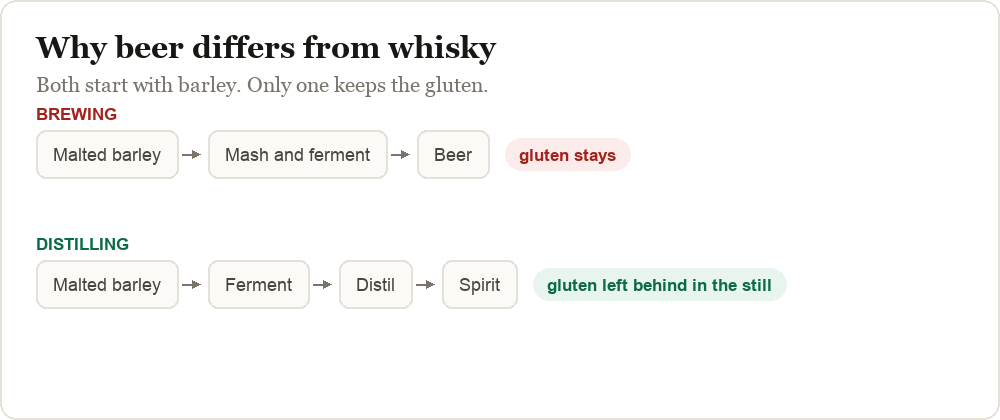
Rule one: distillation removes gluten. Beyond Celiac states that pure, distilled liquor is gluten-free even when made from wheat, barley or rye, because the distillation process leaves the proteins behind. The TTB, which regulates most US alcohol, permits distilled spirits made from gluten grains to be labelled gluten-free. So the base spirit under an amaretto is almost never the problem, whatever it was distilled from.
Rule two: what is added after distillation is the actual risk. Beyond Celiac flags exactly this for liqueurs, flavourings and additives introduced post-still, plus cross-contact in facilities handling wheat, barley or rye. A liqueur is by definition a spirit plus stuff, and the stuff is where gluten gets in.
Disaronno passes both. Its official product page lists the liqueur as gluten free and nut-allergy free, alongside Kosher certification and non-GMO status. The flavour is built on apricot kernel oil rather than almonds, which is why a product that tastes emphatically of almond can also be nut-allergy free. That is a manufacturer statement about Disaronno, not about amaretto in general. One producer's document cannot clear a category, which is why the verdict stays "depends."
Lazzaroni is the interesting exception. Published ingredient listings for Amaretto Lazzaroni 1851 describe a base of water, beet sugar and alcohol distilled from molasses (not grain at all, which sidesteps rule one entirely), flavoured with an infusion of the company's own Amaretti Chiostro di Saronno biscuits, plus distilled cocoa and caramel colouring. Traditional amaretti are made from almond flour, sugar and egg white, and many are naturally wheat-free. But the company does not publish a gluten statement, and a biscuit infusion is a cereal-adjacent ingredient that entered after distillation. Ingredient-screening databases flag it as uncertain for exactly that reason. We could not confirm the gluten status of Lazzaroni amaretto, and we are not going to guess it.
Luxardo and store brands. Luxardo's amaretto is often described as using real almonds, and secondary gluten-free round-ups list amaretto among gluten-free liqueurs generally (a general write-up, not a ruling on any named brand), but we did not locate a Luxardo gluten statement. Supermarket own-brand amarettos publish even less. For anything other than Disaronno, the honest position is: probably fine, unconfirmed, and one email away from being settled.
How much risk is this?
Celiac disease: Disaronno is safe on the manufacturer's own statement. For other brands, treat it as unresolved rather than assumed, particularly any amaretto whose marketing emphasises a biscuit or amaretti infusion, since that is the one construction where a cereal ingredient can plausibly appear. One email to the producer resolves it permanently.
Non-celiac gluten sensitivity: low concern across the category. Even where a biscuit infusion exists, the quantity carried into the finished liqueur is small.
Nut allergy, a different question worth flagging. Amaretto's flavour usually comes from apricot kernels rather than almonds, and Disaronno explicitly states it is nut-allergy free. Other brands do use real almonds. If you are managing a nut allergy as well as gluten, that variable moves independently of this one.
Cross-contact: the standing liqueur caveat. Facilities that also handle cereal components exist; Disaronno's own gluten-free listing covers its finished product.
What to have instead
If your bottle isn't Disaronno and you'd rather not wait on an answer:
- Disaronno OriginaleThe default answer. Listed gluten free by the maker, universally stocked, and the flavour reference point every other amaretto is measured against.
- Grand MarnierGluten-freeCognac and bitter orange essence, with a direct "does not contain gluten" statement in the brand's own FAQ. Different flavour, same confidence level.
- CointreauOrange peel, sugar and neutral spirit, widely treated as gluten-free. The standard cocktail workhorse.
- Kahlúa and sambucaBoth appear on published gluten-free liqueur round-ups, and both fit Beyond Celiac's rule that a distilled base plus non-cereal flavouring is fine. Coffee and anise respectively, both sweet enough to fill the same slot in an after-dinner drink.
- Almond extract plus a plain spiritGluten-freeFor baking and cocktails, a gluten-free-labelled almond extract over brandy or vodka reproduces the amaretto profile with a two-ingredient risk surface.
The liqueurs that need real scrutiny are the ones flavoured with a solid food: cookie, biscotti, cake and cream liqueurs, and anything where the marketing leads with a baked good. That is where post-distillation gluten actually lives.
Related questions
Is Disaronno gluten-free? Yes. Disaronno's own product page lists it as gluten free, along with nut-allergy free, Kosher and non-GMO. It is made with apricot kernel oil rather than almonds.
Does amaretto contain almonds? Often not. Disaronno's flavour comes from apricot kernel oil, which produces the same marzipan character. Some other brands, including Luxardo, are described as using real almonds. This is a nut-allergy question, not a gluten one.
Is amaretto made from grain alcohol? Some are, some aren't, Lazzaroni's published listing specifies alcohol distilled from molasses. It doesn't matter much either way: Beyond Celiac and the TTB both treat distilled spirits as gluten-free regardless of the starting grain.
Is amaretto sour gluten-free? The liqueur usually is. The sour mix is the variable, most commercial sour mixes are sugar, citrus and acids and are fine, but check any pre-batched mixer. Egg white in a proper amaretto sour is not a gluten issue.
Is amaretto safe in baking? The liqueur, yes, if the brand is cleared. Amaretti biscuits themselves are a separate product and a separate check, many are naturally wheat-free almond macaroons, many commercial ones are not. Tiramisu, cantuccini and almond tarts built around amaretto are usually wheat-based.
How do I confirm a brand that isn't Disaronno? Email the producer and ask one specific question: "Does any ingredient added after distillation (flavourings, infusions, colourings), derive from wheat, barley or rye?" Naming the post-distillation stage gets a real answer instead of a boilerplate disclaimer about the base spirit.
How we checked
| Source | Tier |
|---|---|
| Disaronno Originale official product page, listed "Gluten free", "Nut-allergy free", Kosher certified, non-GMO | A |
| Beyond Celiac, Is Liquor Gluten-Free?, distilled liquor is gluten-free; watch post-distillation flavourings and cross-contact | B |
| Celiac.com, What Brands of Liquor are Gluten-Free?, commercial publisher, secondary reporting | D |
| Paolo Lazzaroni & Figli, Amaretto Lazzaroni 1851, published ingredient listing includes an amaretti biscuit infusion; no gluten statement | C |
| Spoonful, Lazzaroni Amaretto, flagged as possibly containing gluten depending on ingredient source | D |
| Luxardo and supermarket own-brand amarettos, no gluten statement located | n/a |
Overall source tier: B, tier A for Disaronno alone. This page rules on amaretto as a category, and a manufacturer's document about its own bottle cannot carry a category verdict, however good that document is. So Disaronno's published gluten-free listing covers the Disaronno row and nothing else; what holds the page up is Beyond Celiac's ruling on distilled liquor and liqueurs. Below that sit the Lazzaroni ingredient listing, which carries no gluten statement at all, and the Celiac.com round-up, which is secondary reporting rather than a ruling on any named brand.
The verdict is depends rather than gluten-free on purpose, and the sources say why: one brand has published a gluten-free listing; another publishes an ingredient list containing a biscuit infusion and no gluten statement at all. Collapsing those into a single confident "yes, amaretto is gluten-free" is the mistake most pages on this query make.
Last verified: 10 August 2026. Producers reformulate without notice, and this is a category where the flavouring, not the alcohol, is the variable. The label on the bottle in your hand outranks this page.